Key takeaways
- A healthy adult cat that steals a little ordinary dog food will usually be fine. Return to the cat's normal food and watch for stomach upset.
- Dog food is not poisonous to cats, but it is formulated for another species. It should not become a meal, a fallback diet or a way to save cupboard space.
- Cats need assured amounts of nutrients that dog food may not provide, including taurine, preformed vitamin A and arachidonic acid.
- The reliable label check is simple: look for a food described as complete for cats and appropriate for the cat's life stage.
What to do after one stolen meal
If a healthy adult cat has taken a few bites from the dog's bowl, there is usually no reason to panic. Ordinary commercial dog food is not inherently toxic to cats. Put it out of reach, offer the cat's usual food at the next meal and keep an eye out for vomiting, diarrhoea or an unusual change in behaviour.
Quantity and context matter. A lick of gravy is not the same as finishing a large dog's dinner. A cat with a diagnosed allergy, kidney disease, diabetes or another condition may also have less room for an unplanned meal. Veterinary dog food deserves extra care because it may be designed to change mineral, protein or fat intake for a specific patient.
The useful distinction is acute versus routine. One ordinary snack is mainly a question of tolerance. Repeated meals are a nutrition problem because the recipe was never designed to be complete for a cat.
Why cat food and dog food are different
Dogs and cats share a kitchen, but not a nutrient profile. Dogs can make or convert several nutrients that cats must receive ready-made in food. The Merck Veterinary Manual lists taurine, preformed vitamin A and arachidonic acid among the dietary essentials that distinguish cats from dogs. Cats also have higher requirements for protein and for several amino acids and vitamins.
That does not make every cat food visibly different. Both foods may contain meat, grains, oils, vitamins and minerals, and the bowls can look almost identical. The difference sits in formulation: the amount of each nutrient, its usable form, and whether the finished recipe meets the profile for the named species and life stage.
This is why reading the ingredient list alone cannot answer the question. Chicken in both bags does not make the two foods nutritionally interchangeable. Pets need the finished nutrient balance, not a familiar first ingredient.
Why taurine gets so much attention
Taurine is an amino acid that cats cannot make in sufficient amounts. A long-term deficiency can damage the retina and contribute to dilated cardiomyopathy, a disease in which the heart becomes enlarged and weak. Modern complete cat foods include taurine at levels set by feline nutrient guidelines, which has made classic diet-related deficiency far less common.
Dog food may contain taurine, but a dog recipe does not have to satisfy the feline taurine profile. Finding the word in an ingredient list is not enough either. The final amount, processing losses, food format and energy density all matter, which is why FEDIAF sets different taurine minima for dry and canned complete cat foods.
Taurine is the best-known difference, not the only one. A cat also needs dietary arachidonic acid and preformed vitamin A, plus the right amounts of arginine, niacin and other nutrients. Adding a taurine supplement to dog food would not turn the whole recipe into cat food.
The label line that settles the question
Turn the pack around and find the legal description. In the UK and EU, wording such as “complete pet food for adult cats” means the recipe is intended to provide the full daily diet for that species and life stage when fed as directed. “Complete pet food for adult dogs” makes a claim about dogs only.
Life stage matters alongside species. Kittens, pregnant or nursing cats and healthy adults do not use the same nutrient profile. A kitten needs a complete food for growth, reproduction or all life stages, not an adult dog food and not an adult cat food.
“Complementary” is another stop sign for an everyday diet. It describes treats, toppers and other products that are not complete on their own, even when a cat is pictured on the front. Our guide to complete and complementary pet food explains where to find this wording.
Keeping bowls separate in a mixed-pet home
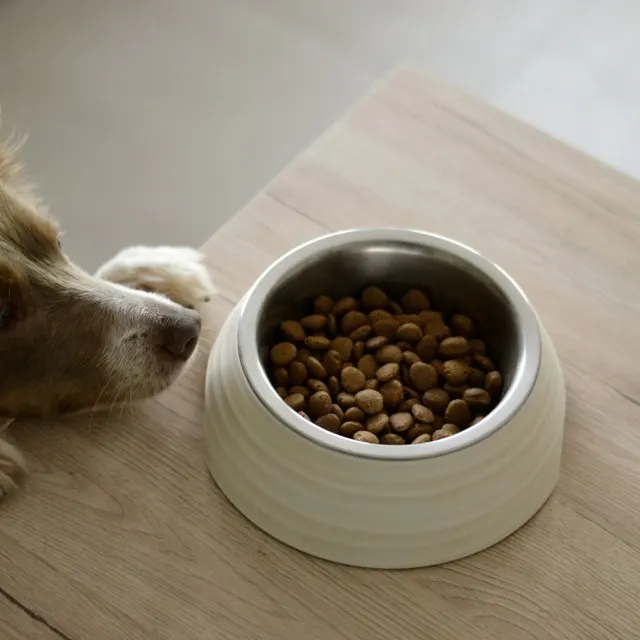
The practical problem is often not a confused owner but a determined cat. Free-fed dog kibble is an open invitation, especially when the cat's own bowl is empty. Separate meal times make the easiest fix: put both bowls down, give each pet a quiet place, then lift what remains after the meal.
- Feed the cat on a stable raised surface that the dog cannot reach, if the cat is comfortable jumping.
- Use a microchip feeder when one pet grazes or needs a veterinary diet.
- Store both foods in their original packaging inside closed containers, so the label and batch code stay with the food.
- Do not compensate for stolen food by skipping the cat's next full day of meals. Return to the normal routine.
If the cat repeatedly rejects cat food and seeks the dog's bowl, look beyond preference. Dental pain, nausea and other illness can change eating behaviour. Cats also should not go for prolonged periods without eating, so a persistent appetite change belongs with a veterinarian.
When to call a veterinarian
Ask for veterinary advice if the cat ate a very large amount, develops repeated vomiting or diarrhoea, seems painful or unusually quiet, or refuses normal food. Call sooner for a kitten, a pregnant cat, or a cat with a known medical condition.
Also check what was actually in the bowl. A standard retail dog food is different from food mixed with medication, supplements, onions, garlic or another household ingredient. If there is any chance the meal contained something toxic, keep the package and contact a veterinarian or animal poison service rather than waiting for symptoms.
Frequently asked questions
Can a cat eat dog food for one day?
A healthy adult cat that steals some ordinary dog food will usually be fine. Put the dog food away, offer the cat's normal complete food and watch for vomiting or diarrhoea. The concern is repeated feeding, not one ordinary mouthful. Call your veterinarian if the cat ate a large amount, seems unwell, has a medical condition or the dog food was a veterinary diet.
Why can dogs not share their food with cats every day?
Dog food is built to meet canine nutrient profiles. Cats need assured dietary taurine, preformed vitamin A and arachidonic acid, and they have higher requirements for several amino acids and vitamins. A dog food can be complete for a dog while still being incomplete for a cat.
What happens if a cat eats dog food long term?
The risk is nutritional deficiency. Depending on the dog food, a cat may receive too little protein or miss assured amounts of taurine and other cat-specific nutrients. Deficiencies build over time and can affect the heart, eyes and general health, which is why the everyday food should say that it is complete for cats and match the cat's life stage.
Can kittens eat dog food?
Dog food should not be a kitten's meal. Growth raises the need for energy, protein and a carefully balanced set of nutrients. Choose a complete kitten food or a complete cat food explicitly labelled for growth or all life stages. Ask a veterinarian promptly if a young kitten is refusing its proper food.