Key takeaways
- Change the food over about a week, mixing more of the new into the old in steps, and hold a step whenever stools go soft.
- Cats get a slower schedule and a hard safety rule: a cat that stops eating for more than a day or so needs a veterinarian, not a standoff.
- Read the new label before day one. If the energy density differs, the old portion is wrong for the new food.
- Most of the trouble blamed on a new recipe is really the speed of the change or an uncorrected portion.
Why the gut needs notice
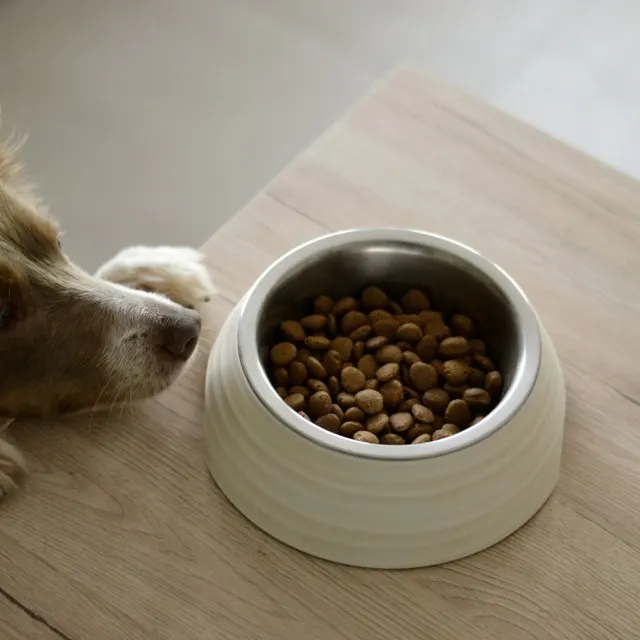
A pet that has eaten one food for months has a digestive system tuned to exactly that food: the gut bacteria, the enzymes, the rhythm of the day. Swap the bowl's contents overnight and that machinery meets a different protein source, a different fat level and a different fibre profile all at once. The common results are soft stools, wind, an unhappy stomach, or a pet that simply walks away from the bowl.
None of that means the new food is bad. It usually means the change outran the gut's ability to adapt. The fix is boring and reliable: give the transition a week, and let each step settle before taking the next one.
This is also why so many online reviews claiming a food "made my dog sick" are hard to read. Without knowing how fast the switch happened, a bad week tells you almost nothing about the recipe.
A week that works for most pets
The standard pattern, printed on many packs and recommended by veterinary teams, mixes the two foods in shifting proportions across roughly seven days.
- Days 1 and 2: about one quarter new food, three quarters old.
- Days 3 and 4: about half and half.
- Days 5 and 6: about three quarters new food.
- Day 7: fully on the new food.
The proportions do not need to be precise. What matters is the direction and the pace, and one rule that overrides the calendar: if stools go soft or appetite dips at any step, stay on that mix for another day or two before increasing the new food again. Pets with sensitive digestion or a history of stomach trouble deserve the slow version from the start, ten to fourteen days rather than seven.
Throughout the week, both foods together should add up to one normal daily amount. The transition changes what is in the bowl, not how much of it there is.
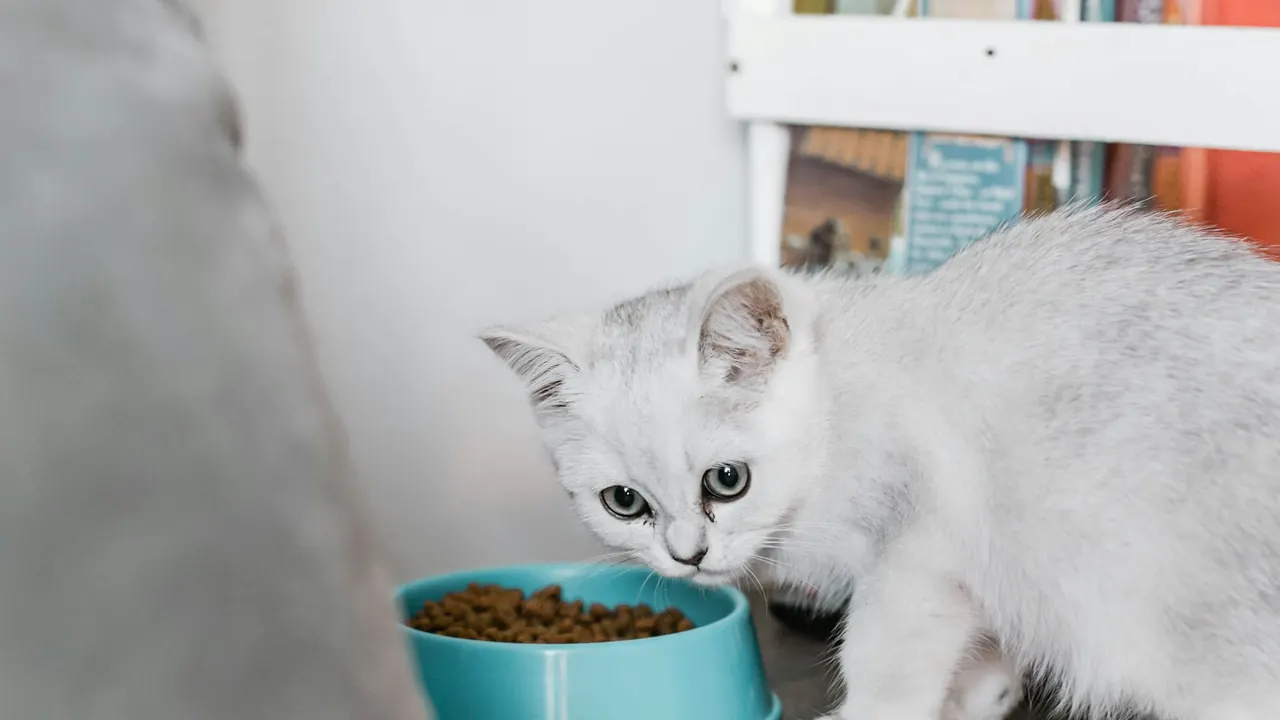
Cats are the special case
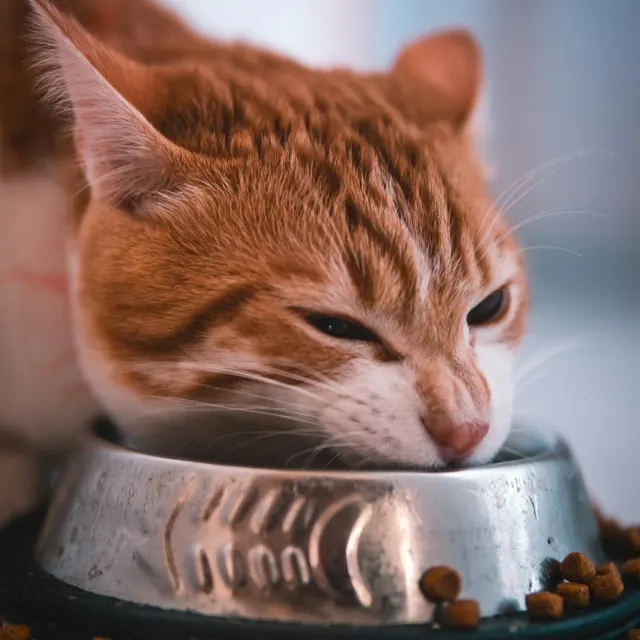
Cats are famously suspicious of unfamiliar food, and with cats the stakes of a standoff are different. A dog that sulks past a meal or two comes to no harm in almost all cases. A cat that stops eating is a genuine medical concern.
Prolonged fasting in cats can trigger hepatic lipidosis, a serious and potentially fatal liver condition. The Cornell Feline Health Center notes that it is more common in overweight cats, and that in most cases it follows a period of not eating. The practical rule is simple: a cat that refuses food for more than a day or so needs a veterinarian, not a firmer stance at the bowl. Waiting a cat out until it gives in is not a transition strategy, it is a risk.
So the feline version of the schedule is gentler. Stretch it to ten to fourteen days. Offer the new food beside the old in a separate bowl at first, rather than mixed, so a refusal does not contaminate the familiar meal. Slightly warming wet food releases aroma and helps with acceptance. And keep an escape route: if the cat consistently refuses the new food, go back to the old one and choose a different candidate rather than escalating.
Check the new label before day one
Two checks on the new pack prevent most post-switch surprises, and both take under a minute.
First, confirm the new food is a complete food for your pet's species and life stage. Complete and complementary are defined categories on EU labels, and a complementary product is not designed to be the whole diet. Our guide to complete and balanced statements covers where the wording sits on the pack.
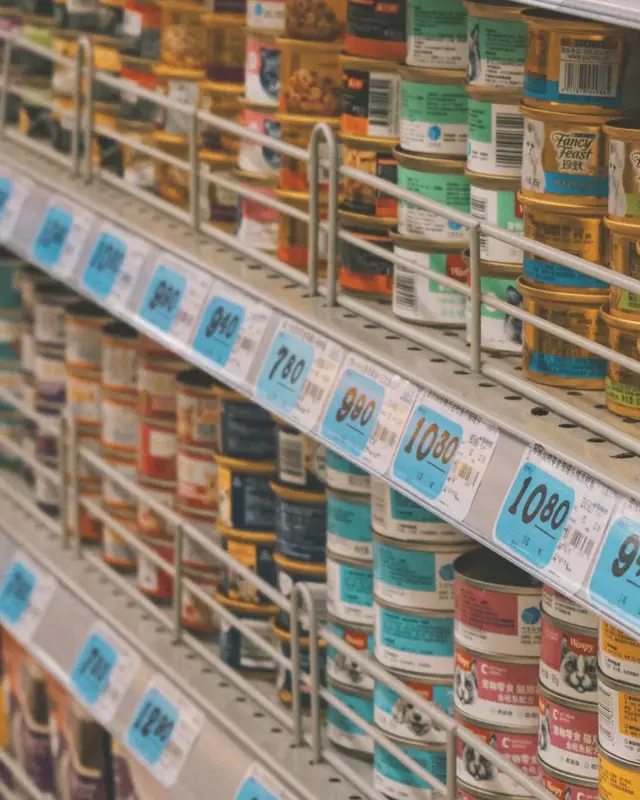
Second, compare the energy density, printed as kcal per kilogram or per 100 g. Two foods rarely match, and the difference can be large. A pet moved from a food at 340 kcal per 100 g to one at 400 kcal per 100 g, on the same scoop, quietly gains almost a fifth more calories every day. The old portion belongs to the old food; the new one needs its own calculation, which our guide on how much to feed walks through step by step.
If the switch also crosses formats, from dry to wet or back, the portion change is dramatic rather than subtle, and the numbers on the two packs stop being comparable as printed. That case has a guide of its own.
When you cannot do it gradually
Sometimes the week is a luxury you do not have. The food is recalled, discontinued, out of stock everywhere, or the bag ran out on a Sunday night. A recall in particular means stopping the old food immediately; matching a package against a recall notice is covered in our guide to recalls and safe handling.
For an abrupt switch, stack the odds in your favour. Choose a new food as close as possible to the old one: same species and life stage, same format, a similar protein source and a similar energy density. Feed smaller meals more often for the first day or two, and expect some mild digestive wobble without treating it as proof the food is wrong.
What an abrupt switch does not change is the arithmetic. The portion still needs recalculating from the new energy density, and skipping that step is how a stressful week turns into a heavier pet a few months later.
Signals that end the experiment
A transition is an experiment with a defined exit. Mild, brief digestive upset during the change is common. The following are not part of the deal, and each one means stopping and calling a veterinarian rather than pressing on.
- Vomiting or diarrhoea that persists beyond a day or two, or is severe from the start.
- Blood in stool or vomit, black tarry stool, or a pet that seems weak or in pain.
- A cat refusing food for more than a day or so, whatever the reason.
- A flare of itching or skin trouble in a pet with known food allergies, since diet trials for allergic pets belong under veterinary guidance in the first place.
One more boundary worth naming: if your pet eats a therapeutic or prescription diet for a diagnosed condition, the choice and the changeover both belong to your veterinarian. A gradual schedule does not make an unsupervised switch off a medical diet safe.
Frequently asked questions
How long should it take to switch my pet to a new food?
About a week for most healthy dogs and cats, stepping from a quarter new food up to fully switched. Sensitive pets and most cats do better over ten to fourteen days, and any step that produces soft stools deserves an extra day or two before moving on.
Can I switch pet food cold turkey?
When a recall or an empty bag forces it, yes: choose a close match in format and profile, feed smaller meals more often at first, and expect a few days of mild wobble. As a convenience shortcut while the old food is still available, it is not worth the week of cleanup.
What if my pet refuses the new food?
Drop back to the last accepted mix and go slower. A dog holding out past a meal or two is rarely in danger. A cat that stops eating for more than a day or so needs a veterinarian, because prolonged fasting in cats can trigger hepatic lipidosis, especially in overweight cats.
How do I switch a cat's food?
Over ten to fourteen days, keeping the familiar food available. Try the new food in a separate bowl beside the old at first, warm wet food slightly for aroma, and treat consistent refusal as a reason to pick a different food rather than to wait the cat out.
Do I need to change the portion when I change foods?
Almost always, because energy density differs between foods. Take the kcal per kilogram or per 100 g from the new pack and recalculate the daily amount. Carrying the old scoop across foods is one of the most common causes of slow weight gain.